Interview with Satoshi of FONK Motorcycles, Japan. Where Triumph Lives and Breathes in Kobe
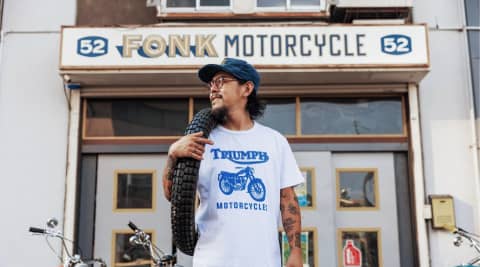
FONK Motorcycle's Instagram: fonkmotorcycle
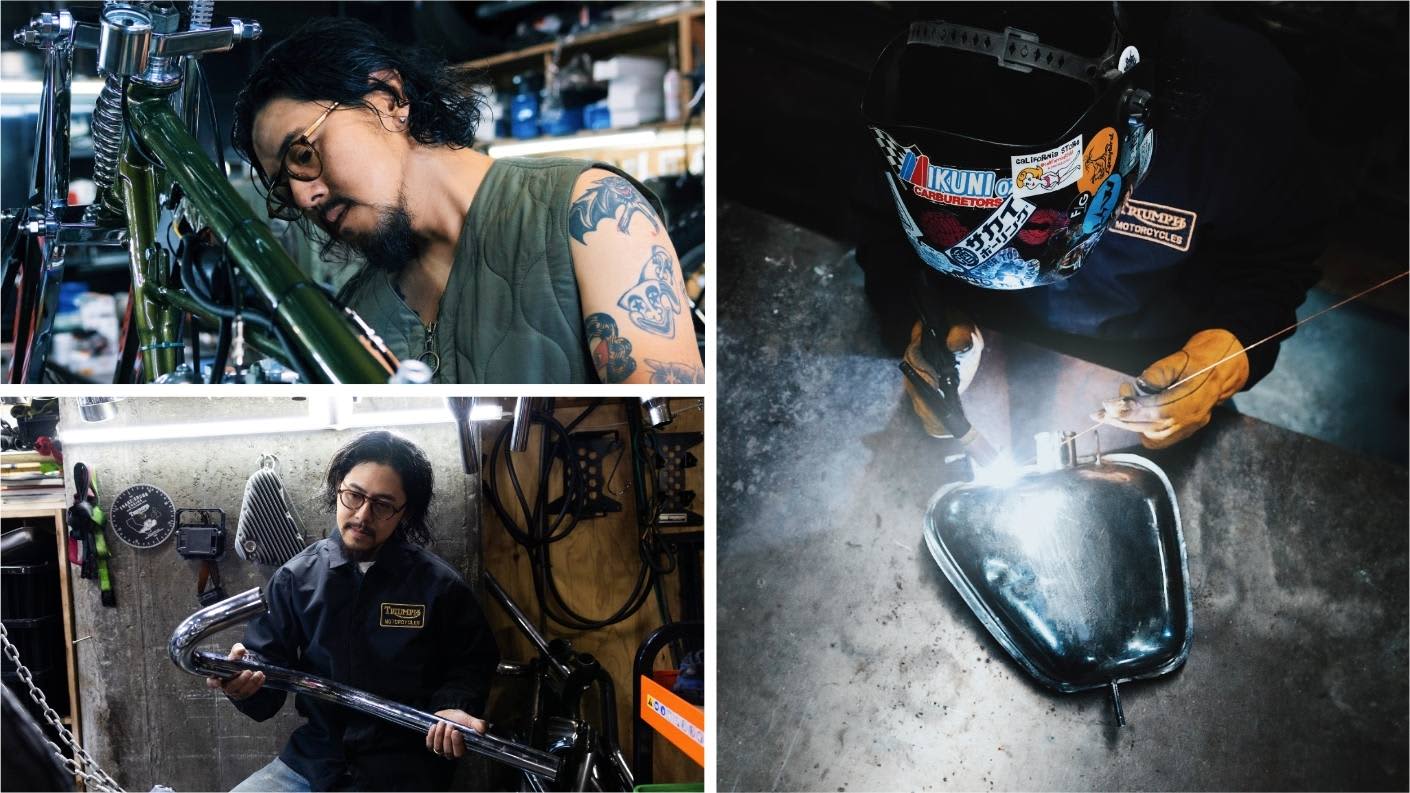
Hidden beneath the railway arches of Kobe, FONK Motorcycles is more than a garage, it’s a sanctuary for riders who believe motorcycles are a way of life. We sat down with Satoshi, lead mechanic and co-founder, to talk about Triumph, craftsmanship, and the culture that makes FONK a hidden gem in Japan’s motorcycle scene.
Satoshi, Fonk Motorcycles has a reputation for being more than just a workshop. How did it all begin?
I spent around five and a half years training at a motorcycle shop, where the owner taught me everything from maintenance and painting to welding and the deeper mechanics of motorcycles. His younger brother was also running a British-only custom shop, and watching his work up close gradually sparked my interest in Triumph. Before long, I bought a 1968 Unit 650 engine as a basket case. The frame came from his brother, and under his guidance I learned to build a hardtail, fully rebuild the engine, and fabricate the bodywork from scratch. That machine became my first Triumph. I’ve ridden many different motorcycles over the years, but I came to realise that Triumphs suited my instincts and sensibilities better than anything else. Owning my own shop had always been a dream, and that led me to establish FONK. Little by little, and with patience and care, I’ve dedicated myself to sharing the appeal of Triumph working with the machines and their culture with the respect they deserve.
What makes Fonk different from other garages in Japan?
I often hear that many custom shops in Japan, especially those dealing with vintage motorcycles, can feel quite closed off, and I personally feel the same way. For dedicated enthusiasts, that kind of space works well enough, but for younger riders, or for those who want to start exploring vintage Triumphs more deeply, it can be a difficult environment to step into. With FONK, I want to create a place and community that serves as a gateway for those people. Somewhere they can begin riding motorcycles, and begin their relationship with Triumphs, without feeling intimidated. Many of our customers are from a younger generation, mainly in their 20s to 40s. None of us, myself included, can claim to know everything about motorcycles or the culture surrounding them, but the ideal for me is that we share knowledge openly and grow together. I’m particularly drawn to the way Triumphs are approached and styled in the United States, so whenever I can, I travel there to learn from American friends. Being able to bring those experiences back and feed them into FONK for our customers is something I genuinely look forward to, it’s what keeps me motivated day by day.
Can you describe the atmosphere inside Fonk?
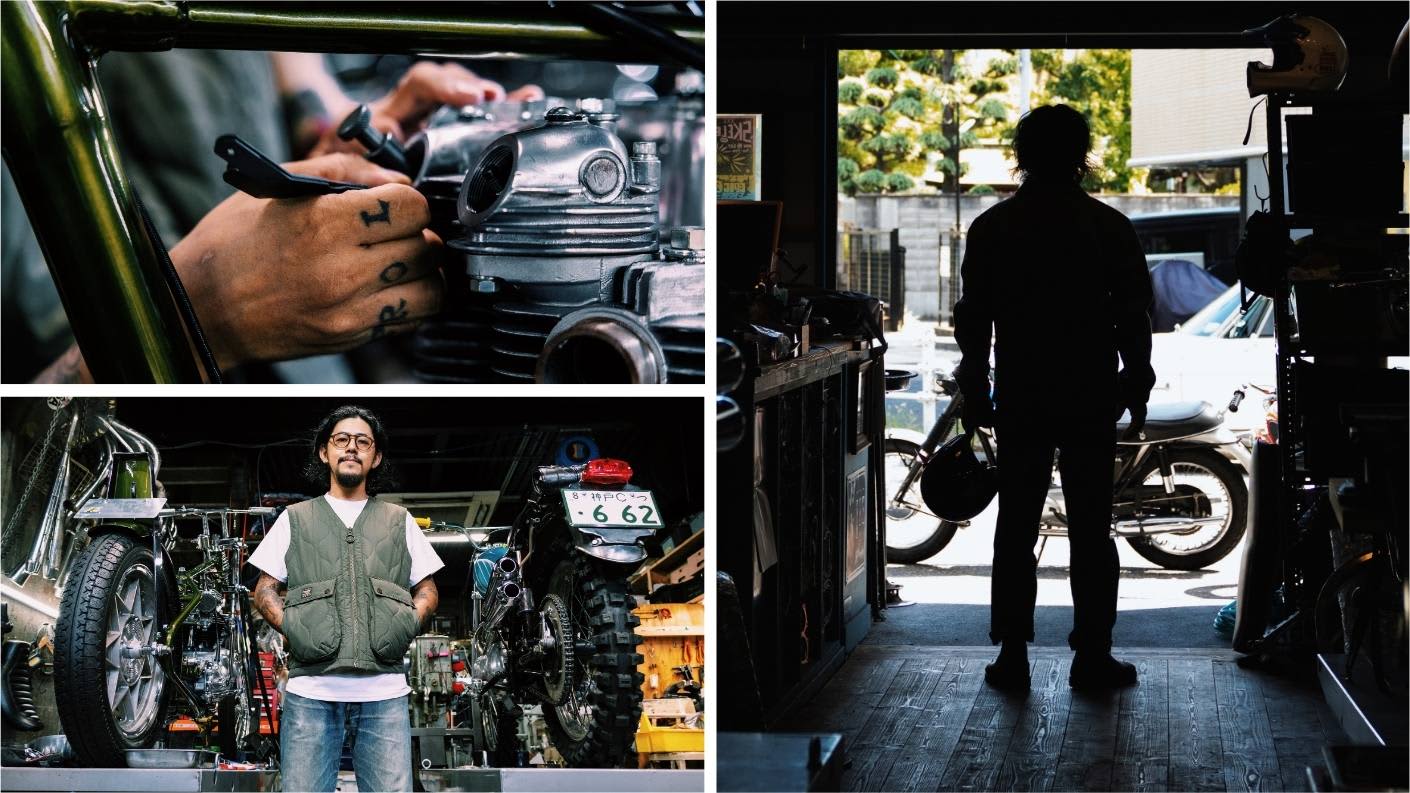
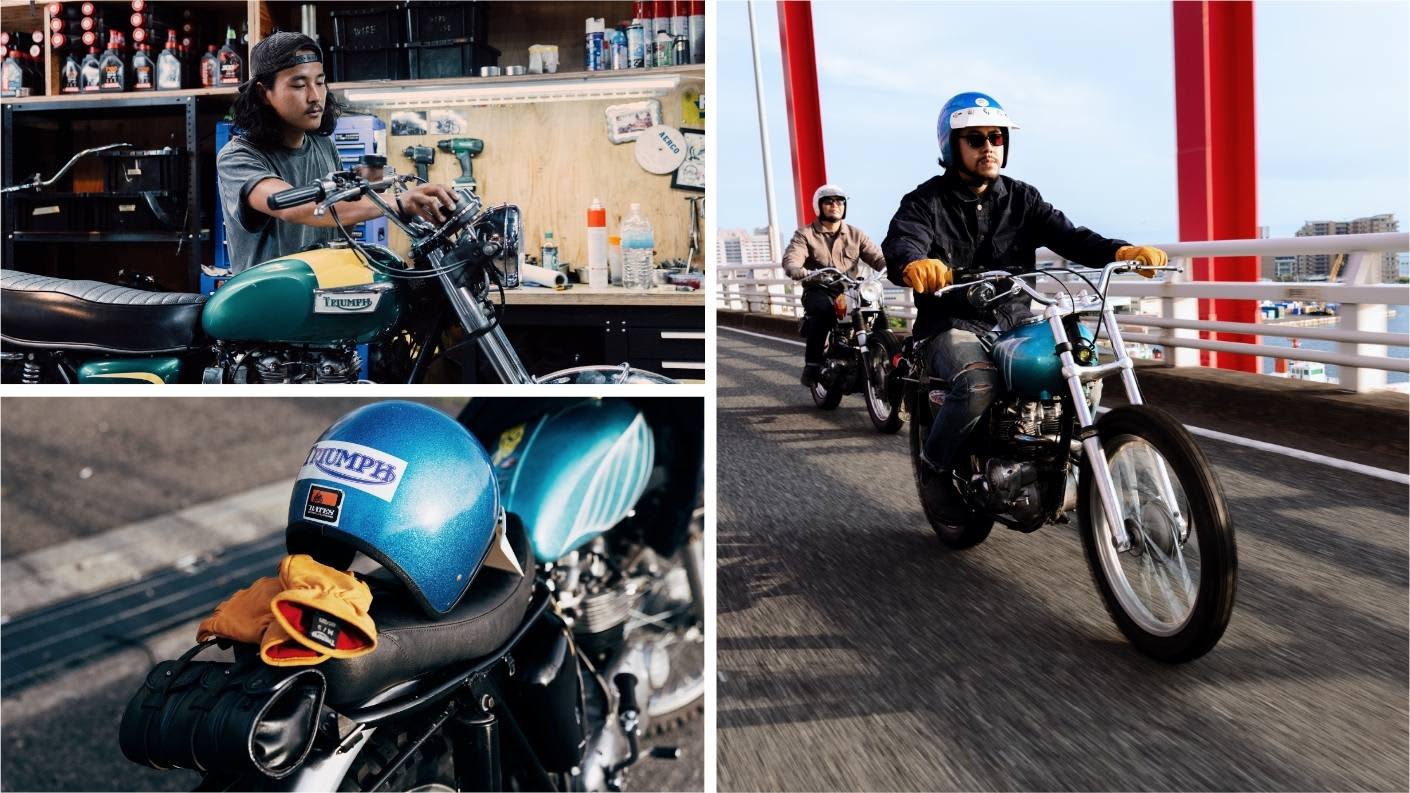
It’s quiet, but unmistakably alive. Rock and blues drift from the speakers, sometimes funk or soul, while the air carries the mixed scent of petrol and engine oil, punctuated by the clink of tools. On the lifts sit Triumph TR6Cs and T120Rs, alongside desert sleds and choppers in the midst of custom builds. In one corner, a TR6C rests mid-restoration, while the walls are lined with vintage blacklight posters. In the showroom, you’ll find not only motorcycle manuals, but also books on art and tattoo culture. It’s not uncommon for riders to sit and read while we work. People often bring sake or homemade food to share. The spirit is distinctly Japanese, but the heart of the place is pure Triumph.
What’s the Triumph scene like in Japan, and how does FONK fit into it?
It’s growing quietly, but steadily. I think Japanese riders are drawn to Triumph not because of speed, but because of feeling. For us, what matters most is building a connection with the motorcycles and the culture around them, and preserving something special in our own, classically minded way. Compared to the long established Triumph shops that came before us, FONK is still like a baby. We may not yet match them in terms of experience or technical depth, but our motivation and passion are second to none. Right now, we’re in a phase of growing our circle. I believe it’s important for us to take action ourselves and pass on the joy of Triumph to a younger generation. I recently spoke with Elliott from Le Hangar 23 in Costa Mesa, California. We talked about how, in a global era, it would be great to create environments where people can enjoy motorcycles beyond the boundaries of countries and scenes. It takes time, but we believe in building things slowly, starting with small steps. Lately, I’ve been taking my own T100R onto forest roads and entering races, which has led to countless encounters and lessons. When people tell me that FONK was the reason they became interested in Triumph and when many of them go on to buy their own, it feels incredibly rewarding. If FONK can play even a small role in helping that passion for Triumph spread, it would be an honour.
Do you have a personal Triumph story that stands out?
It might be the T100R I own now. Last year, while I was in the US spending time at Elliott’s shop, he casually said, “We’re heading out to Meatball’s place from Hell on Wheels in Arizona, do you want to come along?” I didn’t have a bike with me, but among the Triumphs Elliott owned was a T100R in largely original trim. I asked if I could buy it, and he said, of course. It already had a T100C cylinder head fitted, converted to a single carb, with a left-side high pipe perfect as a base. Almost as if I’d planned for it, I had brought a seat I’d built in Japan along with Fonk’s original handlebars, so we fitted those straight away. I also installed a Ceriani front end Elliott gave me, machining parts on the lathe to make it work. I remember working on the bike flat on the ground and getting told off by Tink, the chief mechanic, something we can laugh about now. Then we set off together for Arizona. Riding across that vast landscape was overwhelming in the best way. The excitement, the tension, the smell of dust, the intensity of the sun. Everyone rode freely, maybe a little too freely. We got separated, ran low on fuel, and for a moment it genuinely felt like we might be stranded. But somehow, we all made it back before sunset. Honestly, there was a moment of real panic. Being welcomed into that kind of dynamic, American style adventure made it an unforgettable day. I’m grateful to everyone who took me along. After that, the T100R came back with me to Japan, where I continued to refine and maintain it. It now runs beautifully. The people I met, and the emotions this Triumph connected from California and Arizona all the way back to Kobe are things I’ll never forget. I want to once again express my deepest thanks to Elliott, and to everyone who brought me along on that Arizona journey.
What’s next for FONK Motorcycles?
We see FONK as a bridge connecting our customers with people who truly live and breathe motorcycles. There is still so much we must learn from those who came before us, and many things simply can’t be learned through the internet alone. It’s true that more people are becoming interested in Triumph and starting to ride them, but it’s also true that knowledge of motorcycle history and culture is often limited. If this culture is to survive, it’s essential that riders develop a deeper, more accurate understanding and perspective. Our goal is for FONK to grow into a place where experienced veterans & people with real-world knowledge and lived experience can connect with customers through events, rides, and shared time. A place where people don’t just ride, but learn while enjoying the process. That’s how we believe this culture can continue forward. And of course, more Triumphs. Always more Triumphs.
What’s the culture like at FONK Motorcycles when it comes to Triumph?
At FONK, the Triumph culture is quiet and sincere. There’s no flash, no showing off. What matters here is the motorcycle itself, and a deep respect for the time, history, and stories carried within it. Owners naturally treat one another with respect, valuing not how fast a bike is, but how it’s lived with and cared for. A Triumph at FONK isn’t just something you own, it’s a shared language. It connects people across generations and levels of experience, forming a community that is understated, but deeply rooted. That calm, thoughtful bond is what defines Triumph culture at FONK.
How do Japanese riders connect with the Triumph brand?
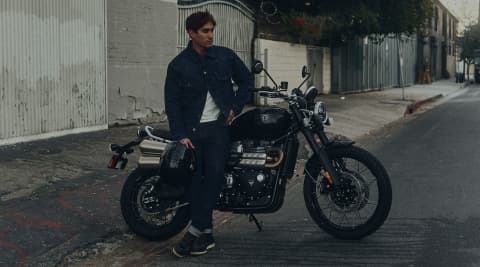
Here, there is a deep respect for craftsmanship. The beauty of Triumph’s design, its long history, and the way it seamlessly blends tradition with modernity, all of it resonates strongly. Japanese riders who choose Triumph value authenticity above all else, and Triumph embodies that ideal, answering those feelings honestly and without compromise. It is no longer simply a British brand; Triumph has become a global language that speaks of freedom. In a world flooded with noise and information, it remains a machine that evokes something unwavering and real, an emotion you can genuinely feel when you ride.
Final thoughts for Triumph riders around the world?
Ride safe and enjoy your bikes. Feel the heartbeat of the machine, share what motorcycling means to each of you, and don’t overthink it. Start with the simple things and get your hands dirty. And if you ever find yourself in Kobe, please do stop by and see us.
And lastly, what’s your favourite Triumph?
1955 Triumph TR5